
Support at Home
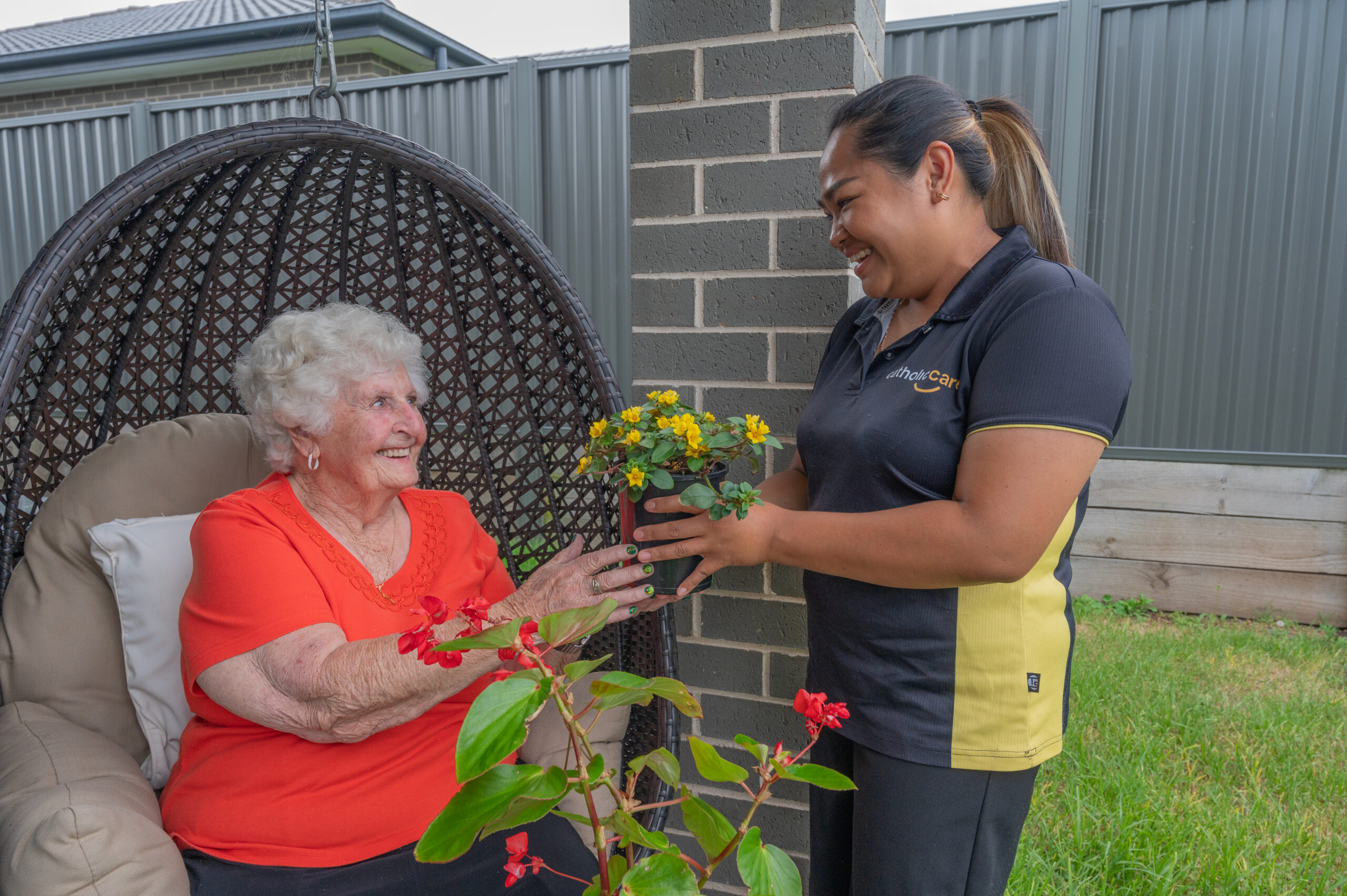
Support at Home is the Australian Government's in-home aged care program designed to help older people remain independent, safe and connected while continuing to live at home.

What is Support at Home?
Support at Home is designed to help older Australian maintain their independence, health, and wellbeing while continuing to live at home and remain connected to their community. Introduced on 1 November 2025, it replaced Home Care Packages and brought in a more flexible approach to in-home aged care with clearer service categories, more funding levels, and a stronger focus on clinical and independence-related supports.
What’s changed from Home Care Packages?
Support at Home builds on the Home Care Packages program it replaced. The main differences include:
- More funding levels – eight classifications instead of four package levels
- Clearer service categories – services are now grouped into clinical, independence, and everyday living, which also determines how costs are shared
- Stronger focus on clinical care – clinical supports are now fully government-funded with no out-of-pocket cost
- New short-term pathways – additional support for assistive technology, home modifications, restorative care, and end-of-life
Already on a Home Care Package? If you were receiving a Home Care Package before November 2025, you’ve been automatically transitioned to Support at Home. Your existing supports continue, and our team can help you understand any changes and what they mean for you.
Who is Support at Home for?
Support at Home is available to:
- People aged 65 or older
- Aboriginal and Torres Strait Islander people aged 50 or older
- People aged 50+ who are on a low income, homeless, or at risk of homelessness
Eligibility is determined through an aged care assessment via My Aged Care.
What Support at Home gives you
Once you’ve completed your assessment and been approved, you’ll receive:
- A summary of your assessed needs and goals
- An individual support plan
- An ongoing funding classification with a quarterly budget
- Approval for additional pathways where eligible (assistive technology, home modifications, restorative care, or end-of-life support)
Funding classifications
Support at Home uses eight (8) classifications (1 to 8) to determine your level of funding, based on the supports you’ve been assessed as needing. Classification 1 provides funding for people with lower-level needs; Classification 8 is for people with complex, high-level care needs.
| Classification | Quarterly Budget |
|---|---|
| 1 | $2,682.75 |
| 2 | $4,008.61 |
| 3 | $5,491.43 |
| 4 | $7,424.10 |
| 5 | $9,924.35 |
| 6 | $12,028.58 |
| 7 | $14,537.04 |
| 8 | $19,526.59 |
Your classification is determined during your assessment and can be reviewed if your needs change over time. Our team can give you a sense of what each classification typically funds during an initial conversation.
What support is available?
Clinical Supports
Clinical supports include:
- Nursing care
- Allied health services
- Prescribed nutrition
- Care management
These services are fully government funded. Participants do not pay out-of-pocket costs for clinical supports.
Independence Support
Independence support includes:
- Personal care
- Social support
- Community engagement
- Therapeutic services
- Respite care
- Transport
- Assistive technology and home modifications
Participants may contribute towards the cost of these services based on their individual financial circumstances.
Everyday Living
Everyday living support includes:
- Domestic assistance
- Home maintenance and repairs
- Meals
These services require the highest level of participant contribution, reflecting the government’s approach to prioritising funding for health and independence-related supports.
The specific services available to you will depend on your assessed needs, goals, and funding classification. For more detail on each service, see our Services page.
Costs & Contributions
How contributions work
Participant contribution amounts are determined by the Australian Government based on the type of service received and your individual financial circumstances, including age pension status and means assessment outcomes completed through Services Australia.
| Category | Government Funding | Your Contribution |
|---|---|---|
| Clinical Supports | Fully funded | No contribution required |
| Independence Support | Co-funded | Based on financial circumstances |
| Everyday Living | Partially funded | Highest contribution level |
Full pensioners generally pay the lowest contributions, while self-funded retirees may contribute more. Contribution amounts are determined by the Australian Government, not by CatholicCare.
An annual cap and lifetime cap apply to participant contributions, meaning there’s a limit to how much you’ll be asked to contribute over time. These caps are set by the Australian Government and are indexed annually.
CatholicCare’s current fee schedule is available to download below and outlines our fees for each service type. Our team can walk you through how fees and contributions apply to your individual circumstances.
Short-term pathways
Each pathway has its own eligibility criteria and funding arrangements. Our team can help you understand whether they may be relevant to your situation.
Restorative Care Pathway
Short-term allied health and nursing support to help you regain function and independence, often after a hospital stay or illness.
Assistive Technology & Home Modification Scheme
Funding for equipment, devices, and home modifications that support your safety and independence at home.
End-of-Life Pathway
Additional support for people choosing to remain at home during their final months. Our team can talk through what this looks like for your situation.
Getting started with Support at Home
Step 1.
Register with My Aged Care
Contact My Aged Care on 1800 200 422 or visit myagedcare.gov.au to register and request an aged care assessment. A family member, carer or friend can contact My Aged Care on your behalf with your consent.
Step 2.
Complete an assessment
An assessment will be arranged through the Single Assessment System to determine your support needs, goals and funding eligibility. An assessor will speak with you (and your family or carer if you’d like) about your current situation, what you need help with, and what goals you’d like to work towards.
It can help to think about:
- Whether you have support from family or friends
- What daily tasks you’re finding more difficult
- Any health conditions or recent changes
- What matters most to you about living at home
Step 3.
Receive your funding classification
You’ll receive a summary of your assessed needs, an individual support plan, and an ongoing funding classification (1-8) with a quarterly budget. You may also be approved for short-term pathways.
Step 4.
Choose your provider
Once approved for funding, you can choose a registered provider like CatholicCare to deliver your services. You have the right to choose your provider and can change providers if your needs or preferences change.
Step 5.
Start receiving support
Our team will work with you to develop a tailored care plan based on your goals, preferences and funding. We’ll coordinate your services and review your plan regularly to make sure it continues to meets your needs.
Already with another provider, or waiting on funding?
Considering switching providers?
If you’re currently receiving services through another provider but exploring other options, our team can talk you through what changing providers looks like and how we might be able to support you. Changing providers is your right.
Waiting for assessment or funding?
Wait times for assessments and funding approvals can vary. While you wait, CatholicCare can provide Private Services to help you get support sooner.
Key Documents

Have questions about Support at Home?
Whether you’re new to aged care, navigating the reforms, considering switching providers, or supporting a loved one through the process, our team can talk you through what Support at Home means for your situation. No pressure, no commitment.